
The Ultimate Guide to Choosing the Best Razor for Men
Choosing the right razor influences far more than shave closeness. It affects skin comfort, long-term cost, sustainability, and how enjoyable your daily shaving routine becomes. The right razor depends on your skin type, beard growth, shaving frequency, and personal preferences. A razor that works perfectly for one person may cause irritation, razor burn, or ingrown hairs for another.
The history of shaving is a long one, for decades, multi-blade cartridge razors have dominated the market by promising closer and more convenient shaves. While they can be convenient, many men eventually experience common problems such as razor burn, ingrown hairs, skin irritation, clogged cartridges, and the ongoing expense of replacing proprietary blades. These challenges have led many people to rediscover traditional double edge safety razors.

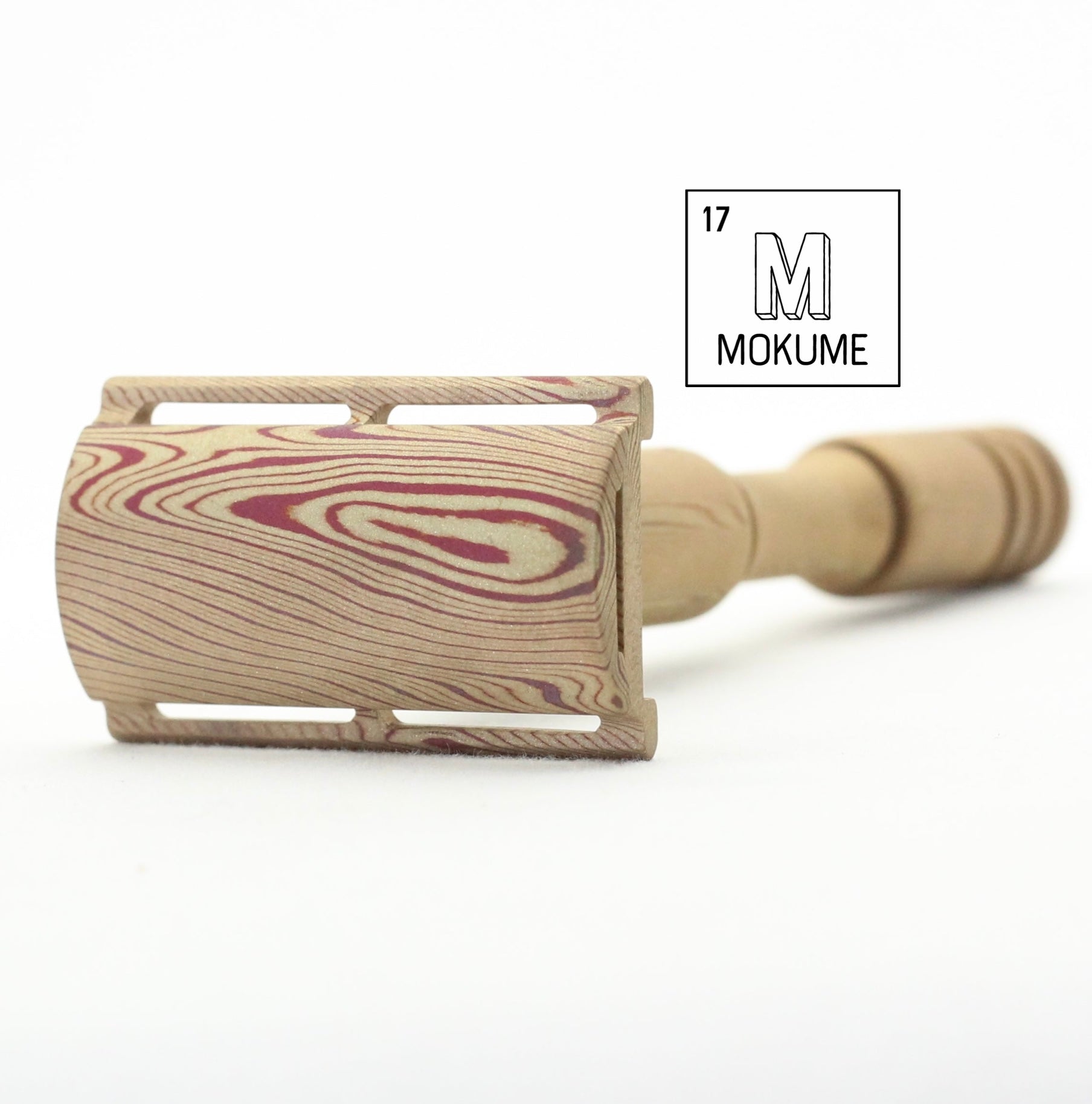
Figure 1. The Carbon Shaving Co. Cx-Mokume combines traditional Mokume-Gane craftsmanship with modern precision engineering to create a premium double edge safety razor designed for decades of use.
Among today's options, double edge safety razors have experienced a resurgence in popularity. Rather than relying on multiple blades, they use a single precision-ground blade that cuts hair cleanly with less repeated contact against the skin. For many men, this approach offers a closer, more comfortable shave while reducing long-term blade costs and plastic waste.
This guide explains the different types of razors available, how to choose the right razor for your skin and beard, and the factors that truly influence shave quality. Whether you're buying your first safety razor or upgrading from a cartridge razor, you'll learn how to make an informed decision and build a shaving routine that works for you.
What is the best razor for men?
The best razor depends on your skin type, beard growth, shaving frequency, budget, and personal preferences. For many men seeking a close, comfortable shave with lower long-term costs and less irritation, a well-designed double edge safety razor offers the best balance of performance, control, and value. When paired with the right blade and proper technique, it can provide an exceptionally close shave while reducing razor burn, ingrown hairs, and unnecessary plastic waste.

Figure 2. Copper has long been valued for its natural antimicrobial properties, making it one of the most distinctive materials used in premium safety razors.
In This Guide You'll Learn
- The differences between cartridge razors, safety razors, straight razors, and electric razors
- Which type of razor is best for your skin, beard, and shaving routine
- Why many men switch from cartridge razors to double edge safety razors
- Which razor is best for beginners
- Which razor is best for sensitive skin
- How to choose the right razor for daily shaving or heavier beard growth
- Why blade selection is just as important as choosing the razor itself
- The most common shaving mistakes—and how to avoid them
- Answers to the most frequently asked questions about men's razors
In This Guide
This guide walks through the major factors that influence shave quality and helps you choose the razor that best matches your skin, beard, and shaving routine.
- Types of Razors
- Choosing the Best Razor for your Shaving Needs
- Safety Razor vs. Cartridge Razor
- Why Do Safety Razors Feel Different?
- Common Mistakes When Choosing and Using a Razor
- Frequently Asked Questions
- Continue Learning
- Recommended Products
Types of Razors
Razor Comparison Table
| Razor Type | Shave Quality | Potential for Skin Irritation | Long-Term Cost | Environmental Impact | Learning Curve |
| Cartridge Razor | Very Good | Higher | $$$ | High | Easy |
| Double Edge Safety Razor | Excellent | Lower* | $ | Low | Moderate |
| Straight Razor | Excellent | Low** | 0 | Very Low | High |
| Electric Razor | Good | Low | $$ | Moderate | Easy |
* Shaving comfort depends on many factors, including shaving technique, blade selection, skin preparation, and lubrication. A well-designed razor is only one part of achieving a comfortable shave.
** Straight razors can provide an exceptionally comfortable shave in skilled hands. However, they require significantly more practice, regular maintenance (stropping and honing), and carry a greater risk of cuts while learning.
Today the world offers several different types of razors, each with its own advantages and disadvantages. Despite advertisers' best efforts, the best razor isn't necessarily the one with the most blades or the highest price—it's the one that best matches your skin type, beard growth, shaving routine, and personal preferences.
Below is an overview of the four most common types of razors and where each one performs best.

Figure 3. Each razor type offers different tradeoffs in closeness, comfort, maintenance, and long-term cost. Understanding these differences helps you choose the best razor for your shaving routine.
Cartridge Razors
Cartridge razors are the most common type of razor sold today. They typically use three to six blades mounted in a non-recyclable, disposable cartridge with a pivoting head.
Advantages
- Easy to learn and widely available
- Convenient for travel
- Fast for quick daily shaves
Disadvantages
- Expensive proprietary replacement cartridges
- Multiple blades repeatedly contact the skin, which may contribute to irritation for some users
- Cartridges can clog with hair, bacteria, shaving soap, and debris
- Limited blade choices compared with safety razor blade options
- Generates significantly more non recyclable plastic waste
Best For
- Men who prioritize convenience and don't mind the ongoing cost of replacement cartridges. Good for air travel.
Straight Razors
Straight razors use a single exposed carbon steel blade that is sharpened and maintained rather than replaced. They represent the traditional barber shaving experience and require the greatest level of skill to use and maintain.
Advantages
- Extremely close shave
- No disposable blades
- Traditional shaving experience
- Can last a lifetime with proper care
Disadvantages
- Significant learning curve
- Requires stropping and periodic honing
- Longer shaving routine
- Less practical for most daily shavers
- Increased risk of cuts while learning. Dangerous!
Best For
- Enthusiasts who enjoy traditional shaving and don't mind the additional maintenance.
Double Edge Safety Razors
A double edge safety razor uses a single replaceable double edge blade that is securely clamped between the razor cap and base plate. Rather than relying on multiple blades, it removes hair with one, sharp, non proprietary, precision cutting edge, giving the user greater control over the shave.

Figure 4. Anatomy of a double edge safety razor showing the cap, base plate, handle, and replaceable blade.
Advantages
- Reduced skin irritation, close, comfortable shave
- Lower long-term blade costs as blades are not proprietary
- Wide selection of blade brands from multiple manufacturers
- Zero plastic waste
- Easier to clean and maintain
Disadvantages
- Requires a short learning period
- Technique is more important than with cartridge razors
- Can't fly with double edge blades
Best For
- Men seeking a closer, more comfortable shave with greater control, lower long-term costs, and an environmentally responsible alternative to disposable cartridges.
Electric Razors
Electric razors use rotating or oscillating cutting heads to trim facial hair without the need for shaving cream or water.
Advantages
- Very fast and convenient
- Suitable for dry shaving
- Minimal preparation required
- Convenient for travel
Disadvantages
- Provide a less close shave as closely
- Higher upfront cost
- Replacement heads can be expensive
- Less effective on longer beard growth
Best For
- Men who value speed and convenience over achieving the closest possible shave.
Choosing the Best Razor for Your Shaving Needs
Choosing the right razor is about more than simply selecting a brand or the number of blades. Your skin type, beard growth, shaving frequency, experience level, and personal preferences all influence which razor will provide the most comfortable and effective shave.
The recommendations below can help narrow your choices based on your individual shaving needs.
Best Razor for Beginners
If you're new to shaving, a cartridge razor will certainly get the job done. However, if you're new to traditional wet shaving, we recommend starting with a mild double edge safety razor that prioritizes comfort and forgiveness over maximum efficiency. Pair it with a smooth razor blade and focus on developing good technique rather than chasing the closest possible shave.

Figure 5. The Carbon Shaving Co. Mild base plate reduces blade feel while maintaining efficiency, making it well suited for sensitive skin, daily shaving, and new wet shavers.
The biggest adjustment for most beginners is learning to use very light pressure. Let the weight of the razor and the sharpness of the blade do the work.
Recommended for:
- First-time safety razor users
- Men changing from cartridge razors
- Sensitive skin
- Daily shaving
Best Razor for Sensitive Skin
If you have sensitive skin, reducing unnecessary blade contact is often more important than increasing shaving efficiency. Many men experience less irritation after switching from multi-blade cartridges to a well-designed safety razor because only a single blade passes over the skin with each stroke.
Pair your razor with:
- A smooth razor blade
- A quality shaving soap
- Proper beard preparation
- Light shaving pressure
Together, these factors often have a greater influence on shave comfort than the razor alone.
Best Razor for Coarse or Heavy Beard Growth
Men with coarse facial hair often benefit from a razor that provides greater shaving efficiency while maintaining excellent control. Rather than applying additional pressure, choose a razor and blade combination capable of cutting dense beard growth cleanly.
If you have a heavy beard, you'll likely replace blades more frequently. Fortunately, inexpensive double edge razor blades make safety razors one of the most economical shaving systems for coarse beard growth. For men who shave every three to five days, a more efficient safety razor or interchangeable base plate can remove heavier growth with fewer passes and less clogging than many cartridge razors.
Best Razor for Daily Shaving
Daily shaving places different demands on a razor than shaving every few days. Comfort, consistency, and skin recovery become increasingly important.
Many daily shavers prefer a razor with reduced blade feel paired with a smooth blade. This combination removes daily beard growth efficiently while helping minimize cumulative skin irritation over time.

Figure 6. Blade selection is just as important as razor selection. A quality double edge blade can significantly improve comfort while reducing irritation.
Best Razor for Long-Term Value
The purchase price of a razor is only one part of its overall cost. Replacement blades, durability, maintenance, and longevity all contribute to the long-term value of your investment.
The straight razor or cut throat razor is the best long-term value because there are no blade replacements, however more work is required to sharpen, hone and care for the straight razor. Although a premium safety razor costs more initially, inexpensive double edge razor blades and durable materials often make it the most economical shaving systems over many years of use. A quality razor can last a lifetime, while replacement blades typically cost only a fraction of proprietary cartridge or electric razor refills.
Best Razor for Growing a Beard
Growing a beard doesn't eliminate the need to shave. Most beards require regular maintenance to keep the neckline and cheek lines neat and well-defined.
For trimming around an established beard, a more efficient safety razor provides excellent visibility and control while reducing clogging from longer hairs. Cartridge razors often clog more easily when shaving several days of growth, while straight razors remain an excellent option for experienced users who enjoy traditional shaving techniques.

Figure 7. Increased blade exposure provides greater cutting efficiency for coarse facial hair while still allowing excellent control with proper technique.
Carbon Shaving Insight
One of the most common questions we receive is:
"Which razor should I buy?"
The answer is usually not "the most aggressive razor" or "the most expensive razor."
After years of designing, manufacturing, and supporting customers around the world, we've found that most people achieve their best shave by matching the razor to their shaving frequency, skin sensitivity, and beard type rather than chasing maximum efficiency.
In our experience, refining your shaving technique and experimenting with different razor blades often has a greater impact on shave quality than purchasing a different razor. Once those fundamentals are in place, selecting the appropriate razor or base plate becomes much easier.
Learn more: How to Choose the Right Carbon Shaving Base Plate.
Safety Razor vs. Cartridge Razor
Since the 1970s, cartridge razors have become the dominant choice for men's shaving because they're convenient, easy to learn, and widely available. However, many wet shavers eventually transition to a double edge safety razor after experiencing skin irritation, ingrown hairs, rising cartridge costs, or simply wanting a closer, more enjoyable shave.
Both systems are capable of producing an excellent shave. The right choice depends on your skin type, beard growth, shaving habits, and personal preferences.
Safety Razor vs. Cartridge Comparison
The table below summarizes the key differences between cartridge razors and double edge safety razors. Individual shaving experiences will vary depending on technique, blade selection, and skin type.
| Feature | Cartridge Razor | Double Edge Safety Razor |
| Initial Cost | Lower | Higher |
| Replacement Blade Cost | Higher (Proprietary) | Lower (Universal DE Blades) |
| Blade Choices | Limited | Dozens of Manufacturers |
| Skin Irritation Potential* | Higher | Lower |
| Ingrown Hair Potential* | Higher | Lower |
| Cleaning | More Difficult | Easier |
| Heavy Beard Growth | Can Clog | Better Flow Through Razor |
| Plastic Waste | Higher | Minimal |
| Expected Lifespan | Months to Years | Generations or Decades |
* Shaving comfort and skin irritation depend on many factors, including razor design, blade selection, shaving technique, skin preparation, and lubrication.
Cost
Although a quality safety razor typically costs more upfront, the long-term cost of ownership is often significantly lower. Double edge razor blades are inexpensive and available from dozens of manufacturers, while cartridge systems rely on proprietary replacement cartridges that generally cost considerably more over time.
For men who shave regularly, the savings in replacement blades alone can often offset the initial investment in a quality safety razor.
Plastic Waste and Sustainability
Most cartridge systems use disposable plastic cartridges that combine plastic and metal into a single unit, making them difficult to recycle.
In contrast, double edge razor blades are made primarily from stainless steel and can be recycled through proper blade disposal programs. A well-made safety razor can last for decades—or even a lifetime. In fact, several Carbon Shaving customers still shave with safety razors that belonged to their grandfathers, including razors issued during World War II. Built to last for generations, a quality safety razor is one of the most environmentally responsible shaving systems available.
Skin Irritation and Razor Burn
One of the most common reasons men switch to a safety razor is to reduce razor burn and post-shave irritation.
Multi-blade cartridges pass multiple blades over the same area of skin during a single stroke. For some individuals—particularly those with sensitive skin, coarse beards, or curly facial hair—this repeated blade contact may contribute to increased irritation.

Figure 8. Repeated blade contact from cartridge razors may contribute to razor burn and irritation for some users, especially those with sensitive skin or coarse facial hair.
A safety razor removes hair with a single sharp blade. Many users find this allows them to achieve a close, comfortable shave with fewer passes over the skin. Another advantage is that double edge blades are inexpensive to replace, making it practical to shave with a fresh, sharp blade more often. Since dull blades are one of the most common contributors to razor burn, replacing blades regularly can improve both comfort and shave quality.
Proper technique, blade selection, skin preparation, and post-shave care remain equally important regardless of which shaving system you choose.
Ingrown Hairs
Ingrown hairs occur when shaved hairs grow back into the skin instead of emerging normally.
While no razor can completely eliminate ingrown hairs, many men find they experience fewer problems after switching from multi-blade cartridges to a safety razor. Because a safety razor cuts each hair once at or near the skin's surface, it may reduce the tendency for hairs to be cut below the skin.
For men prone to ingrown hairs, shaving less frequently can also help. Safety razors generally perform well on several days of beard growth and are less likely to clog than cartridge razors when removing longer hair.
Good shaving technique, proper beard preparation, and avoiding excessive pressure remain the most effective ways to minimize ingrown hairs.
Blade Availability
One of the greatest advantages of traditional wet shaving is blade choice.
Safety razor users can choose from dozens of blade manufacturers, each offering slightly different characteristics in terms of sharpness, smoothness, stiffness, coatings, blade width, and edge geometry. This allows users to fine-tune their shaving experience without replacing the razor itself.
Cartridge users are generally limited to the replacement cartridges designed specifically for their razor handle.
Cleaning and Maintenance
Safety razors are simple mechanical tools that are easy to clean and maintain. A three-piece safety razor can be rinsed thoroughly after every shave and periodically disassembled for a more detailed cleaning.
Cartridge razors, by comparison, often trap hair, shaving soap, skin oils, and other debris between multiple closely spaced blades, making them more difficult to rinse completely—particularly when shaving several days of beard growth.
Long-Term Ownership
A quality safety razor is designed to be a long-term investment rather than a disposable product. Many premium safety razors remain in daily use for decades, and vintage razors more than 100 years old are still used by wet shavers around the world.
For many enthusiasts, a safety razor becomes more than a grooming product—it becomes a precision tool that improves with familiarity and proper care.

Figure 9. The 1945 Gillette Tech helped inspire the Cx platform, including its simple three-piece construction, thin head profile, and practical shaving geometry.
Carbon Shaving Insight
One observation we've made over the years is that many customers initially switch to a safety razor to save money on blades or reduce skin irritation. Interestingly, those reasons often become secondary. Once they become comfortable with traditional wet shaving, many tell us they continue using a safety razor because they enjoy the experience itself—the craftsmanship, the control, and the few quiet minutes each morning spent using a well-made tool. In a world that increasingly values speed and convenience, many find satisfaction in slowing down and turning a daily routine into a small ritual.
Why Do Safety Razors Feel Different?
Many people assume that all safety razors shave the same because they use the same style of double edge blade. In reality, two safety razors can feel completely different despite using identical blades.
Small differences in razor design—including blade rigidity, blade exposure, blade gap, head geometry, and balance—can have a significant influence on blade feel, comfort, and shaving efficiency.
Understanding these characteristics makes it much easier to choose a razor that matches your personal shaving preferences.
Blade Rigidity
Blade rigidity refers to how securely the razor clamps the blade between the cap and base plate. A more rigid blade minimizes blade flex during the shave, helping produce a smoother, more controlled cutting action while reducing blade chatter.

Figure 10. The cap and base plate clamp the blade close to its cutting edge, increasing blade rigidity and helping reduce blade chatter during shaving.
Although blade rigidity is only one aspect of razor design, many experienced wet shavers appreciate the consistency and feedback provided by a securely clamped blade.
Carbon Shaving Insight
During development of the Cx razor, one of our primary engineering goals was maximizing blade rigidity while maintaining a thin head for excellent visibility beneath the nose. Reducing blade flex helped create the smooth, controlled shave that has become a defining characteristic of the Cx platform.
Blade Exposure
Blade exposure describes how far the blade extends beyond an imaginary line drawn between the razor cap and the safety bar. This imaginary line represents the surface of the skin during the shave.

Figure 11. Blade exposure is measured relative to the line formed between the cap and safety bar, which represents the skin surface during shaving.
Greater blade exposure generally increases blade feel, while reduced exposure often produces a milder sensation on the skin.
Blade exposure should not be confused with blade gap. Two razors with similar blade gaps can have completely different blade feel because of differences in blade exposure.
Blade Gap
Blade gap is the distance between the blade edge and the safety bar. It influences how much beard growth can pass beneath the blade during each stroke, which is one reason larger blade gaps often improve shaving efficiency.

Figure 12. Blade gap is the distance between the blade edge and the safety bar, one factor that influences shaving efficiency and comfort.
Although larger blade gaps often increase shaving efficiency, blade gap alone does not determine whether a razor feels mild or aggressive. Blade exposure, head geometry and blade rigidity, all contribute to the overall shaving experience.
Blade Feel
Blade feel describes how much of the blade you perceive against your skin during the shave. Some wet shavers enjoy pronounced blade feedback because it increases awareness of the cutting edge, while others prefer minimal blade feel for maximum comfort. Blade feel is influenced by a combination of blade exposure, blade gap, blade rigidity, head geometry, and the blade itself.
Carbon Shaving Insight
One of the most common misconceptions in wet shaving is that a larger blade gap automatically creates a harsher shave. In practice, we've found that blade exposure often has a greater influence on blade feel than blade gap alone.
Razor Balance
Many people focus on razor weight, but balance often has an even greater influence on how a razor feels during the shave. Balance influences how naturally a razor pivots in the hand. Rather than forcing the razor through the beard, a well-balanced razor encourages light pressure and allows the user to guide the cutting edge with greater precision.

Figure 13. A well-balanced safety razor naturally pivots where the thumb and fingertips guide the handle, encouraging light shaving pressure and precise control.
Head Geometry
Head geometry describes how the cap, safety bar, and blade work together to present the cutting edge to the skin. Head geometry also influences how easily the razor reaches beneath the nose, around the ears, and along edges of a beard.
Figure 14. Different base plate geometries combine blade gap and blade exposure to match different beard types, skin sensitivity, and shaving frequency.
Even small changes in head geometry can dramatically influence shaving comfort, efficiency, and maneuverability. This is one reason two safety razors using the same blade can produce noticeably different shaving experiences. Learn more about base plates and safety razor head geometry.
Carbon Shaving Insight
Choosing a safety razor isn't about finding the "best" geometry—it's about finding the geometry that best matches your beard, skin, technique, and personal preferences. That's one reason experienced wet shavers often develop strong preferences, even when comparing razors that appear nearly identical.
Aggressiveness
"Aggressiveness" is one of the most commonly used—and misunderstood—terms in wet shaving. Most people use it to describe a razor that feels harsh, rough, or uncomfortable against the skin. In reality, what many people perceive as aggressiveness is often a combination of pronounced blade feel, shaving technique, blade selection, and the overall design of the razor.
A razor can be highly efficient without feeling harsh, just as a razor with noticeable blade feel isn't necessarily the closest-shaving razor. This is why two razors with similar blade gaps can produce completely different shaving experiences.
Carbon Shaving Insight
One of the most common questions we receive is, "Which is your most aggressive razor?" After talking with thousands of customers, we've found that many people are actually looking for greater shaving efficiency, some just like more blade feel. Once they understand the difference, choosing the right razor—or base plate—becomes much easier.
To learn how Carbon Shaving uses blade exposure, blade gap, and head geometry to create four distinct shaving experiences, read our Guide to Choosing the Right Base Plate.
Common Mistakes When Choosing and Using a Razor
Choosing the right razor is only part of achieving a comfortable, close shave. Over the years, we've found that many shaving frustrations are caused not by the razor itself, but by common misconceptions about razor design, blade selection, and shaving technique. Different situations may also call for different shaving tools. For example, many travelers choose a cartridge razor when flying because double edge razor blades generally cannot be carried through airport security.

Figure 15. A limited-edition Mokume-Gane safety razor handcrafted from layers of copper and brass, illustrating how premium materials and artisan craftsmanship can transform a daily shaving tool into a functional heirloom.
Avoiding the mistakes below can help you choose the right razor more confidently and enjoy a smoother, more comfortable shave. In many cases, you may discover that you already own the right razor—it simply needs the right blade or technique.
Buying Based Only on Price
Price is an important consideration, but it shouldn't be the only factor when choosing a razor. A less expensive razor may save money initially, but replacement cartridges, limited blade choices, and the caliber of the shave can make it more expensive or a drastic compromise over time.
Instead of focusing solely on purchase price, consider the total cost of ownership, including replacement blades, durability, ease of maintenance, and the quality of your daily shaving experience.
The following chart ranks razor type by total cost of ownership over a lifetime, from least expensive to most expensive:
| Estimated Lifetime Ownership Cost* | Lowest → Highest |
| Straight Razor | ✓ |
| Double Edge Safety Razor | ✓✓ |
| Electric Razor | ✓✓✓ |
| Cartridge Razor | ✓✓✓✓ |
* General comparison. Individual costs vary depending on shaving frequency, replacement blades, electricity, maintenance, and product lifespan.
Carbon Shaving Insight
One thing that has always stood out to us is how disposable modern cartridge systems have become. Most handles and cartridges eventually end up discarded, while a quality safety razor is often used for decades—and sometimes passed from one generation to the next. Another surprise for many new wet shavers is that the largest long-term expense isn't the razor itself, but the ongoing cost of proprietary replacement cartridges. Over many years of shaving, those replacement blades often exceed the purchase price of a premium safety razor.
Assuming More Blades Always Produce a Better Shave
One of the biggest misconceptions in modern shaving is that adding more blades automatically improves shave quality.
For some people, additional blades provide convenience. For others—particularly those with sensitive skin or coarse facial hair—repeated blade contact may increase irritation without producing a noticeably closer shave.
A comfortable shave is influenced far more by technique, lubrication, blade sharpness, and razor design than by blade count alone.
Ignoring Your Shaving Frequency
One of the most overlooked factors when choosing a razor is how often you actually shave.
A razor that's perfect for daily shaving may not be ideal if you shave only once or twice a week or even monthly. Likewise, someone who shaves every morning often benefits from a different razor or base plate than someone removing four or five days of beard growth. Trimming or maintaining a beard is often done monthly if that.
Choosing a razor that matches your shaving routine often has a greater impact than choosing the razor with the highest advertised performance.
Carbon Shaving Insight
One of the first questions we ask customers is, "How often do you shave?" Their answer usually tells us more about which razor or base plate they'll enjoy than almost any other question.
Buying the Most "Aggressive" Razor First
Many new wet shavers assume that a more aggressive razor will automatically produce a closer shave.
In practice, this is rarely the best approach.
For perspective, our Mild (-) base plate is slightly more efficient than the 1945 Gillette Tech safety razor issued to Allied troops during World War II. Despite its name, it provides excellent shaving performance while remaining an outstanding choice for beginners. Developing good technique with a comfortable, forgiving razor almost always produces better long-term results than immediately choosing the most efficient razor available. Once your technique becomes second nature, it's much easier to appreciate the subtle differences between razors, blades, and base plates. Interchangeable base plate systems also allow you to refine shaving efficiency over time without purchasing another razor.
Never Experimenting with Razor Blades
Many people spend hundreds of dollars searching for the perfect razor while continuing to use the same blade brand.
In reality, changing the blade often produces a larger change in shave quality than changing the razor itself. Different double edge blades vary in sharpness, smoothness, coatings, blade width, and edge geometry, allowing you to fine-tune your shave without purchasing another razor.
A quality blade sampler pack is one of the most cost-effective investments a new wet shaver can make. Each razor blade truly has a different feel and comfort level.
Carbon Shaving Insight
During development of the Cx platform, we standardized our testing by using Astra blades for every prototype and replacing the blade after each shave. Keeping the blade constant allowed us to evaluate changes in razor geometry without introducing another variable. One thing became immediately apparent: even experienced wet shavers often underestimate how dramatically blade choice can influence the feel and performance of the very same razor.
Using Too Much Pressure
Many people transition to a safety razor after years of using cartridge razors, bringing the same habits with them. Too much pressure using a straight razor or safety razor is just bad...

Figure 16. A safety razor is designed to shave with a light touch. Allowing the razor's weight and geometry to do the work helps reduce irritation while improving comfort and control.
A safety razor is designed to shave with a light touch. Applying additional pressure rarely produces a closer shave—instead, it often increases irritation, razor burn, and the likelihood of nicks. Allowing the weight and geometry of the razor to do the work is one of the most important skills in traditional wet shaving.
Choosing the right razor is only one part of achieving a great shave. The questions below address many of the topics we hear most often from both new and experienced wet shavers and expand on the concepts discussed throughout this guide.
Frequently Asked Questions
What Brand of Razor Is the Best?
The best razor brand depends on what you value. Some men prioritize convenience, while others value engineering, craftsmanship, longevity, or sustainability. Rather than focusing solely on brand recognition, choose a razor that matches your skin type, beard growth, shaving frequency, and long-term goals.
For those seeking a precision-machined, heirloom-quality safety razor, Carbon Shaving Co. designs and manufactures razors in the USA using premium materials including Grade 5 titanium, 316L stainless steel, stainless Damascus, and Mokume-Gane.

What Type of Razor Gives the Best Shave?
There isn't one razor that's best for everyone. Many experienced wet shavers prefer a well-designed double edge safety razor because it removes hair with a single sharp blade rather than multiple blades passing repeatedly over the skin. When combined with proper technique, a sharp blade, and quality shaving soap, a safety razor can provide an exceptionally close and comfortable shave while reducing long-term blade costs.
Different situations may favor different shaving systems. For example, cartridge razors are often a practical choice for travel, while straight razors appeal to enthusiasts who enjoy the traditional barbering experience.
Are 2 or 3 Blade Razors Best?
Not necessarily. More blades do not automatically produce a closer or more comfortable shave. For some people, repeated blade contact can increase irritation, particularly if they have sensitive skin or coarse facial hair.
A single-blade safety razor provides greater control and allows you to choose from dozens of blade manufacturers rather than being limited to proprietary cartridges.

Figure 18. Double edge safety razors allow you to choose from many blade brands, each with different characteristics in sharpness, smoothness, coating, width, and blade feel.
Which Is the Best Men’s Razor to Buy?
The best razor is one that matches your skin type, beard growth, shaving frequency, experience level, and personal preferences.
For many men seeking a long-lasting, traditional, efficient, environmentally responsible shaving kit with lower long-term blade costs, a quality safety razor is an excellent investment.

Figure 19. A mirror-polished 316L stainless steel safety razor reflects the precision machining, hand-finishing, and durable materials used in premium shaving tools. A polished razor slides smooth, is less likely to corrode and is easier to clean..
Is a Safety Razor Better Than a Cartridge Razor?
Neither system is universally better—it depends on your priorities.
Many people choose a safety razor because it offers lower long-term blade costs, a wider choice of blades, less plastic waste, and greater control over the shave. Others prefer cartridge razors because they're convenient, familiar and you can fly with them.
The best choice is the one that fits your skin, beard, and shaving routine need.
What Is the Best Safety Razor for Daily Shaving?
For daily shaving, comfort is usually more important than maximum shaving efficiency.
Many daily shavers prefer a razor with moderate blade exposure paired with a smooth blade. This combination removes daily beard growth comfortably while helping minimize cumulative skin irritation.

Figure 20. A milder base plate reduces blade feel while maintaining efficiency, making it well suited for daily shaving and sensitive skin.
What Type of Razor Is Best to Prevent Razor Burn?
Razor burn is usually caused by a combination of dull blades, excessive pressure, poor lubrication, repeated passes, and shaving technique rather than the razor alone. I talk more about razor burn here.
Many wet shavers find that a well-designed safety razor, paired with a sharp blade, quality shaving soap, and good technique, helps reduce irritation while providing a close, comfortable shave.
How Often Should You Change Razor Blades?
Most double edge razor blades perform well for approximately three to five shaves, although this varies depending on beard thickness, shaving frequency, blade brand, and individual technique.
Many wet shavers find that a blade feels slightly smoother after its first shave, although experiences vary depending on the blade and beard type. If you notice tugging, increased irritation, or a decline in shave quality, it's time to replace the blade.
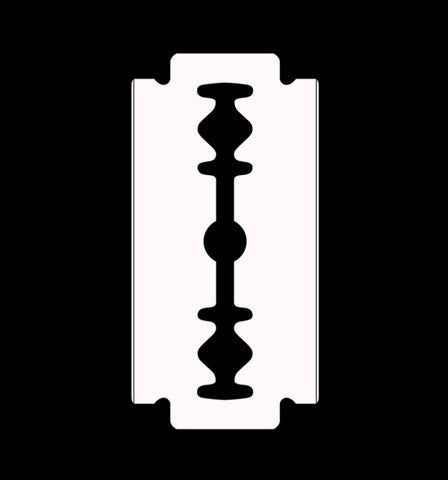
Figure 21. Replacing double edge razor blades regularly helps maintain a close, comfortable shave while reducing tugging, irritation, and dull-blade drag.
What Kind of Razor Gives the Closest Shave?
A professionally performed straight razor shave is often considered one of the closest shaves available. However, a well-designed safety razor can produce an exceptionally close shave at home while offering greater convenience, lower long-term costs, and the satisfaction of mastering a traditional skill.
The closest shave isn't determined by the razor alone. Blade selection, shaving technique, beard preparation, time and razor design all contribute to the final result.
Is a More Expensive Razor Worth It?
Price alone doesn't determine shave quality. However, premium safety razors are usually machined, often use higher-quality materials, tighter manufacturing tolerances, and more durable finishes that can improve longevity, comfort, and the overall shaving experience.
Which Razor Is Best for Sensitive Skin?
Many people with sensitive skin prefer a well-designed safety razor because only a single, sharp blade passes over the skin with each stroke. Pairing the razor with a smooth blade, quality shaving soap, technique, and good preparation often has an even greater influence on comfort than the razor itself.

Figure 22. Proper post-shave care helps soothe freshly shaved skin and completes a comfortable traditional wet shaving routine.
Which Razor Is Best for Coarse Beards?
Men with coarse facial hair generally benefit from a razor that provides sufficient shaving efficiency without requiring excessive pressure or repeated passes. Choosing the appropriate double edge razor blade, and shaving technique, including preparation, usually produces better results than simply selecting the most aggressive razor available. Blade choice and shave frequency is critical with this hair type.
How Long Does a Safety Razor Last?
A quality safety razor can last for decades—and often a lifetime—with proper care. Many vintage safety razors manufactured more than 100 years ago remain in daily use today. Well-made safety razors are frequently passed from one generation to the next, making them one of the few grooming tools that can truly become heirlooms.
Are Safety Razor Blades Difficult to Find?
No. Double edge razor blades are widely available from dozens of manufacturers around the world. One of the greatest advantages of traditional wet shaving is the ability to choose from a wide variety of blade brands, each offering slightly different characteristics in terms of sharpness, smoothness, coatings, and blade feel. Blade sampler packs are an excellent way to compare several brands before purchasing larger quantities.
Is a Safety Razor Hard to Learn?
Not at all. Most people become comfortable with a safety razor after only a few shaves. The biggest adjustment is learning to use less pressure and allowing the razor and blade to do the work.

Figure 23. A well-designed safety razor is typically guided with the handle around 45 degrees, creating a blade angle near 28 degrees. Slightly riding the cap can make the shave feel milder.
Look for an affordable "Starter Kit", don't spend months searching for the "perfect" razor. Start with a well-designed razor, pair it with a quality shaving soap and several different blade brands, and focus on developing good technique. In our experience, refining your technique and experimenting with blades often has a greater impact on shave quality than purchasing a different razor.
Which razor is better, the safety razor or the cartridge razor?
The rise of cartridge razors during the 1970s reflected changing consumer priorities. Manufacturers focused on speed, convenience, and ease of use, while traditional wet shaving continued to emphasize craftsmanship, user choice, and the shaving experience itself. Today, many men are rediscovering safety razors—not because cartridge razors are ineffective—but because they appreciate the greater control, lower long-term costs, wider blade selection, and satisfaction that come from using a well-designed tool.
Continue Learning
Choosing the right razor is only the first step toward achieving a consistently great shave. The guides below explore the topics introduced in this article in greater depth, helping you refine your technique, understand razor design, and help you build a shaving routine that suits your skin and beard.
Beginner's Guide to Wet Shaving
Learn the fundamentals of traditional wet shaving, including beard preparation, shaving angle, building a proper lather, and developing good technique.
Best Double Edge Razor Blades
Discover how different blade brands vary in sharpness, smoothness, blade feel, and efficiency—and why blade selection often has a greater influence on your shave than many people expect.
Choosing the Right Base Plate
Learn how blade gap, blade exposure, blade rigidity, and shaving frequency work together to influence shaving comfort and efficiency.
How to Prevent Razor Burn
Understand the most common causes of razor burn, skin irritation, and ingrown hairs—and learn practical techniques to achieve a more comfortable shave.
How to Clean and Maintain Your Safety Razor
Regular maintenance helps preserve your razor's appearance, cleanliness and performance for years of reliable use.
Carbon Shaving Insight
One thing we've learned after years of designing and supporting our safety razor customers is that the best shave rarely comes from changing just one thing. Improving your technique, experimenting with different blades, preparing your beard properly, and developing a consistent post-shave routine all contribute to a better shaving experience. Traditional wet shaving rewards patience, curiosity, and continual refinement—and that's part of what makes it so enjoyable.
Recommended Products
- Cx Razor Collection
- Configure Your Titanium Razor
- Configure Your 316L Stainless Steel Razor
- Gallery of custom and limited edition razors
- Individual 316L Base Plates
- Wet Shaving Starter Kit
- Shaving Soap
- Aftershave Balm
Start Your Wet Shaving Journey
Whether you're purchasing your first safety razor or refining a shaving routine you've enjoyed for years, the goal isn't to find the "perfect" razor—it's to find the combination of razor, blade, technique, and preparation that works best for you.
Traditional wet shaving is a skill that improves with experience. Every shave teaches you something, and small improvements over time often produce dramatically better results than changing equipment alone.
Explore the Carbon Shaving Cx Collection →
Final Thoughts
Choosing the best razor isn't about finding the most expensive razor or the one with the most blades. It's about selecting a shaving system that matches your skin, beard, shaving routine, and long-term priorities.
For some men, that may be a cartridge razor. For others, it may be an electric or straight razor. But for those seeking greater control, lower long-term costs, less plastic waste, and the ability to refine every aspect of the shave, a well-designed double edge safety razor remains one of the most effective shaving tools ever developed.
The more you understand blade design, shaving technique, and razor geometry, the easier it becomes to build a shaving routine that delivers consistently comfortable, close shaves for years to come.

Written by Sean McManus

Leave a comment
This site is protected by hCaptcha and the hCaptcha Privacy Policy and Terms of Service apply.