The Ultimate Guide to Safety Razor Shaving (By Carbon Shaving Co.)

The Ultimate Guide to Safety Razor Shaving

By ·

Quick take: Safety razors deliver a closer, less irritating shave and dramatically reduce the cost of replacement blades. When used with proper technique and care they deliver a smooth, clean and irritation free shave. This guide walks you through choosing the right razor, step-by-step shaving technique, maintenance, post-shave care, and why materials like 316L stainless and titanium matter.

What is a safety razor?

A safety razor is a shaving tool that holds and positions a single double-edge (DE) blade between a cap and base plate. The design exposes just the blade edge necessary for cutting while protecting the skin from the rest of the blade with a guard — the reason it’s called “safety.”

Compared with multi-blade cartridge systems, safety razors typically offer:

  • Smoother, closer and cleaner results with less irritation
  • Lower long-term cost (double edge blades are cheap)
  • Far less plastic waste

Learn more: Are safety razors better for the environment?

A classic safety razor - Machined Quality Luxury

Ergonomic handle on the Carbon Shaving Co. Cx-316L safety razor


What is the history of the safety razor?

The safety razor emerged in the late 1800s, when a safety guard was added to a "cut throat" razor and later became mainstream in the early 20th century with the invention of the disposable-edge razor blade. Over the last decade, manufacturers have been able to make the safety razor less and less expensive by casting and machining cheap material. A few artisans and small manufacturers have revived the luxury heirloom form, focusing on premium materials, precision engineering, and aesthetics — while preserving the core performance benefits.

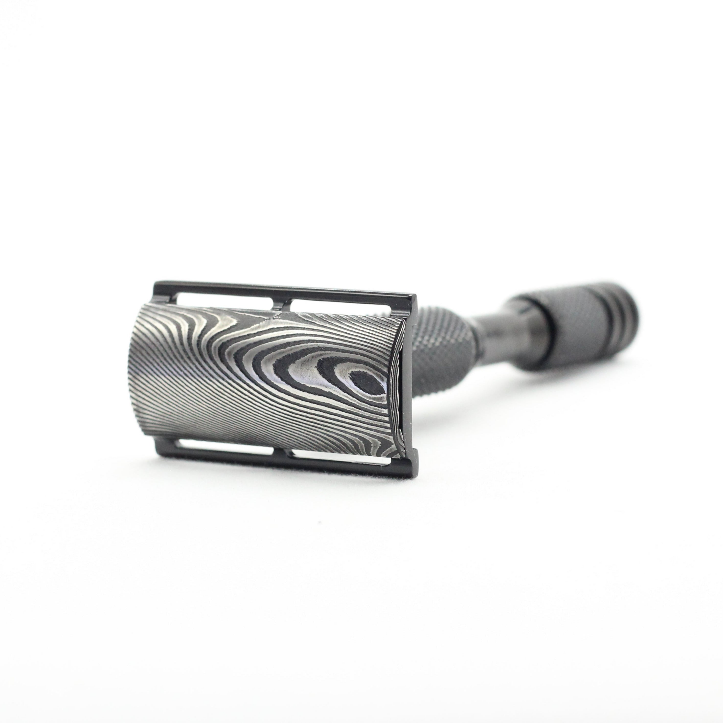
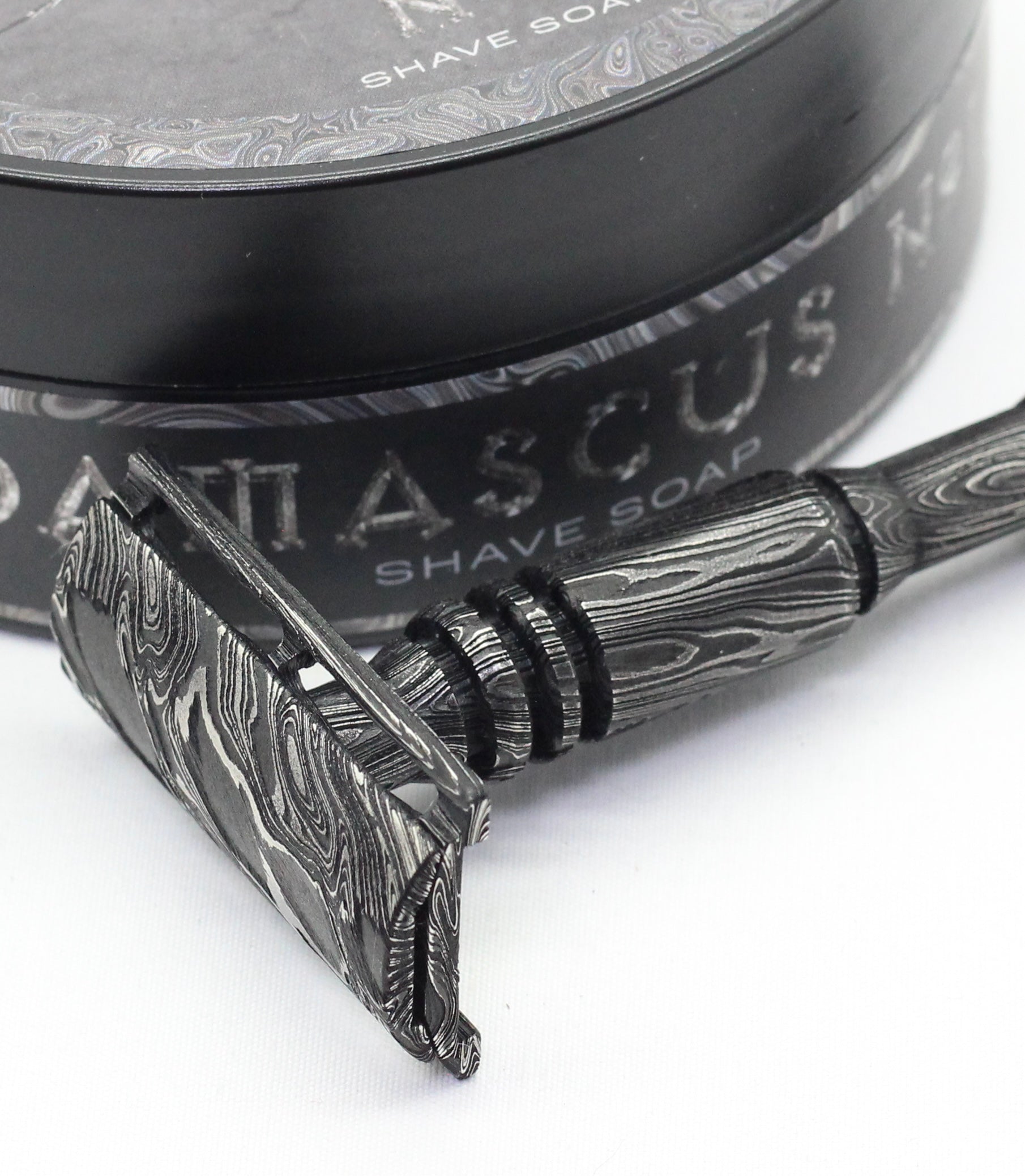
At Carbon Shaving Co., we design razors that combine modern materials like Grade 5 titanium and 316L stainless steel along with luxury exotic materials like stainless Damascus with refined ergonomics aimed at improving the shaving experience for discerning users.

Learn more: History of safety razors

Alexander The Great - Required shaving of his soldiers

Alexander The Great was the first to recommend shaving with his soldiers


How do I choose the right safety razor?

Selecting a razor comes down to four practical factors: aggressiveness(efficiency), weight & balance, handle design, and material.

Tip: For beginners, try a milder base plate in 316L stainless. Example: Cx-316L stainless steel 

What does aggressiveness(efficiency) mean in a safety razor?

A razor’s aggressiveness is determined by blade gap(space between safety bar and blade) and blade exposure. A milder razor reduces the blade’s exposure to the skin and is ideal for beginners or sensitive skin. More aggressive heads provide a closer shave with fewer passes but require a refined technique. More aggressive razors tend to have more blade exposure and a larger blade gap.

How important are weight and balance in a safety razor?

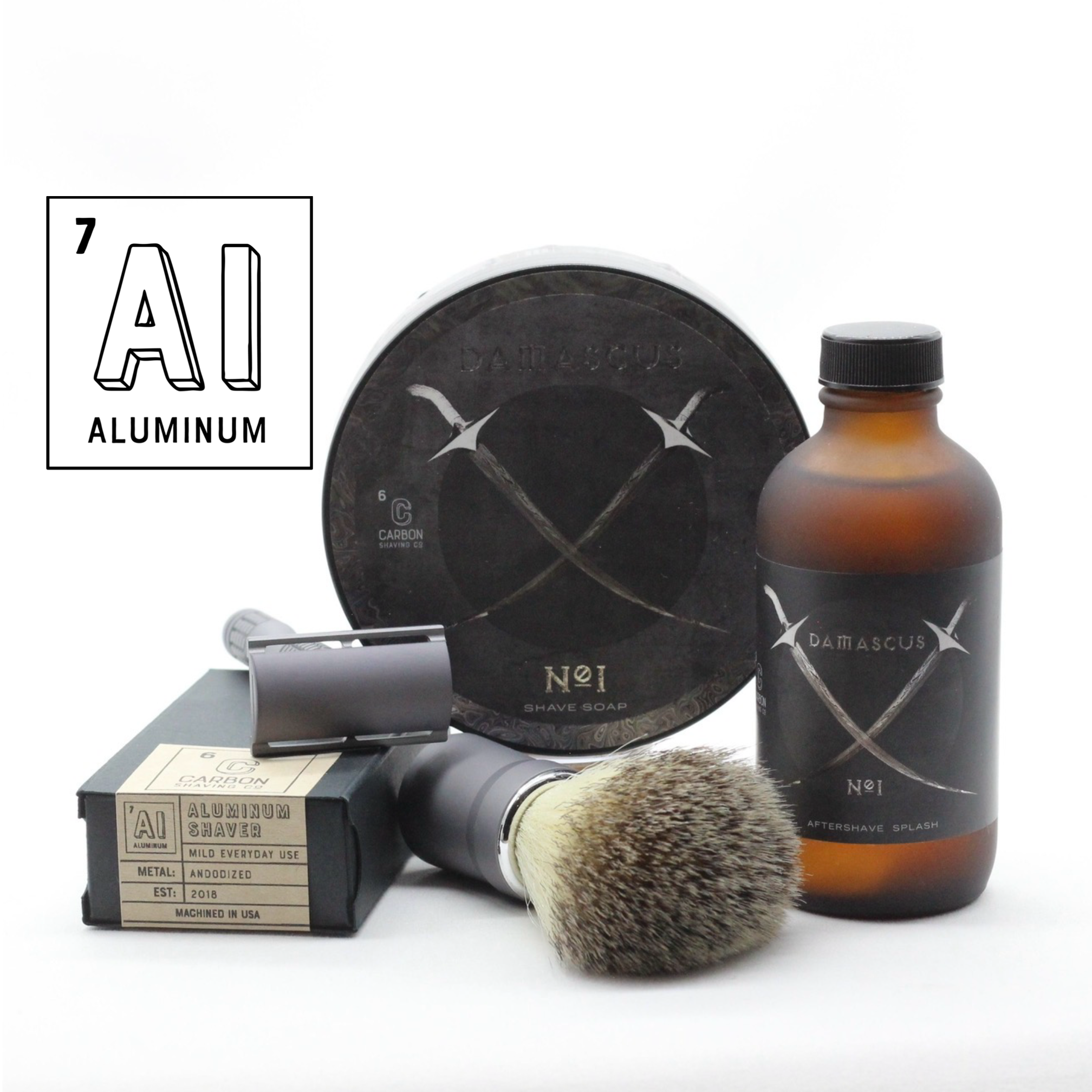
Weight will apply pressure to help guide itself: a heavier safety razor and balanced handle allow you to use less pressure. Titanium and aluminum razors will tend to be light, while stainless steel, copper and brass razors tend to be heavier. 

What are the best safety razor materials?

Material changes the experience, durability, and finish. 316L stainless is durable and corrosion-resistant, Grade 5 titanium is more corrosive resistant but is also lightweight and strong. Damascus oand Mokume finishes provide a unique, collector-quality and heirloom appearance.

What about the finish of a safety razor?

A polished finish will provide a superior glide across the skin, more durability to the surface and a razor that is easier to clean. The polished surface is smoother and slicker and provides less crevices for bacteria and rust to develop. Other surface are less expensive to finish and are often cheaper. Carbon Shaving Co. talks more about surface finishes on safety razors here.

Balanced at the finger Titanium safety razor
Balanced safety razor at the finger tips is ideal

How do you shave with a safety razor? (Step-by-step)

Below is a concise step-by-step HowTo you can use on shaving days.

For a more detailed process: Beginners Guide to using a safety razor

Step 1 — Prepare your skin

Hydrate with warm water for at least 2 minutes. Use a gentle facial cleanser and, if your skin benefits, a thin layer of pre-shave oil to soften the beard and reduce friction.

Recommended: Pre-Shave Oil

Step 2 — Build a stable lather

A dense, creamy lather cushions the skin and provides slip or slickness. Use a good shaving soap or cream, a brush, and 20–40 seconds of building the lather until it’s glossy and thick. Add water as needed, if it sticks to the shower wall or mirror without sliding down, it is ready.

Recommended: Shaving Soap

Step 3 — Shave with the grain

Hold the razor handle at approximately a 45° angle(This differs for different razors). Let the weight of the razor do the work — apply almost no additional pressure. Start with a pass with the grain, rinsing the blade regularly.

The Best Shaving angle for a safety razor - 45 degree handle and 27-30 degrees blade angle
45 degree handle - 27-30 degree blade angle is optimal

Step 4 — Optional across-the-grain pass

After the first pass, re-lather and perform a light pass across the grain if you need more closeness. Avoid aggressive against-the-grain passes until you are comfortable with technique, be careful of against the grain passes in sensitive areas like the neck.

Across the grain on the face and against the grain on the neck

Across the grain path on the face and against the grain path shown on the neck(Each person is different)

Step 5 — Rinse, cool water, and post-shave care

Rinse with cool water, gently pat dry, and apply a soothing balm or splash formulated for post-shave recovery.

Product: Post-Shave Balm (Bisabolol + Niacinamide)


How often should you change a safety razor blade?

Blade longevity depends on hair coarseness, frequency of shaving, and blade brand. Typical ranges are:

  • Fine hair: 6–8 shaves
  • Medium hair: 4–5 shaves
  • Coarse hair: 2–3 shaves

Signs it’s time to change the blade: tugging, increased irritation, or a drop in smoothness.

You can learn more about blades and their characteristics in this post: More about double edge razor blades

Double edge razor blade - Durability

Standard double edge razor blade


How do I clean and maintain my safety razor?

Routine care preserves finish and performance — especially for lower grades stainless steel like 303 or 304 stainless. A simple maintenance routine:

  1. Rinse the razor head and handle thoroughly with warm water after each shave.
  2. Occasionally disassemble and remove soap or hair debris. Use a soft tooth brush and mild soap.
  3. Dry fully — pat with a soft towel or let air-dry before reassembly.
  4. Avoid abrasive cleaners on decorative finishes; use a microfiber cloth for polishing.
  5. If your razor is made with 303 or 304 grade stainless steel, remove the blade to avoid rust development on the razor

For long-term storage, remove the blade, keep the razor dry and avoid humid bathroom environments when possible.

Carbon Shaving Co. talks more about cleaning and polishing different material in this blog: Cleaning and polishing your safety razors.

Clean shaver or safety razor with orange

Are safety razors better for sensitive skin?

Yes — for many people. A single sharp, clean blade reduces repeated irritation that multi-blade cartridges can produce. Safety razors reduce tugging and the formation of ingrown hairs when used correctly with good lather and proper blade rotation.

At Carbon Shaving Co., we recommend the milder head designs and post-shave products that contain soothing ingredients like Bisabolol and Niacinamide to calm inflammation and support skin recovery. We also recommend applying a preshave oil or conditioner prior to shaving cream or soap.

More about shaving with sensitive skin: Mens shaving for sensitive skin


What do razor materials mean for performance and finish?

Materials influence weight, durability, corrosion resistance, ability to clean and aesthetic. Here’s a summary:

Material Traits When to choose
Polished 316L Stainless Steel Durable, corrosion-resistant, easy to clean Daily users who want longevity and low maintenance
Grade 5 Titanium Lightweight, strong, will not corrode Those who prefer a lighter feel with high strength
Stainless Damascus Layered visual pattern, artisanal finish, heirloom and luxury Collectors and enthusiasts who value one-of-a-kind aesthetics
Titanium Damascus Light, bright colors, visual pattern, heirloom and luxury Collectors and enthusiasts who value custom made bespoke pieces.
Mokume Gane Striking mixed-metal look, heirloom quality Collectors and enthusiasts who value patina and the development of an aged look.

Material choice is partly practical and partly personal — select what fits your routine, budget, and aesthetic preference.

Learn more: Materials of safety razors


What matters in post-shave skin care?

Post-shave care restores hydration, calms inflammation, and protects the skin barrier. Key ingredients to look for:

  • Bisabolol — natural anti-inflammatory, reduces redness
  • Niacinamide — strengthens barrier, evens tone
  • Aloe Vera — cools and hydrates

Use a lightweight balm or splash immediately after shaving, and avoid heavily perfumed or alcohol-heavy products if your skin is reactive.

More about post-shave skin care: Essential post care shave skin care tips and tricks


Common Safety Razor Questions (FAQ)

Q: Are safety razors difficult to use?

A: No, They require a brief learning curve, but most users naturally feel comfortable after a few shaves. Using less pressure, proper angle, and quality lather are the main adjustments.

Q: Are safety razors worth the investment?

A: Yes. A well-made safety razor will last a lifetime and lowers recurring costs because double edge blades are inexpensive compared to cartridge refills. Different blade brands are also available to refine your shave experience.

Q: What is the difference between stainless steel razors?

A: There are many differences between different stainless steel safety razors including grades and finishes. 303 and 304 stainless steel grades will rust quicker than 316L marine grade stainless. A Polished finish is easier to clean than a a bead blasted or machine finish and is less likely to rust.

Q: Which products should I use with a safety razor?

A: Start with a stable shaving soap or cream, a pre-shave oil if needed(chair conditioner will work), a quality blade, and a post-shave balm that includes soothing ingredients like Bisabolol and Niacinamide.

Conclusion

Mastering the safety razor is more than technique — it’s about choosing the right tools, caring for them, and treating shaving as a repeatable ritual. At Carbon Shaving Co., we machine instruments that blend modern engineering with timeless design to deliver a deliberate and superior shave. Explore our Safety Razors


{ "@context": "https://schema.org", "@type": "FAQPage", "mainEntity": [ { "@type": "Question", "name": "What is a safety razor?", "acceptedAnswer": { "@type": "Answer", "text": "A safety razor holds a single double-edge (DE) blade between a cap and base plate. The guard exposes only enough of the blade to shave efficiently while protecting skin, giving a closer, smoother, and cleaner shave with less irritation and far less plastic waste compared to cartridge systems." } }, { "@type": "Question", "name": "What is the history of the safety razor?", "acceptedAnswer": { "@type": "Answer", "text": "The safety razor originated in the late 1800s with the addition of a protective guard to straight razors and became mainstream in the early 1900s with disposable blades. Today, artisans and manufacturers like Carbon Shaving Co. have revived heirloom-quality razors using modern materials such as 316L stainless steel, titanium, and Damascus." } }, { "@type": "Question", "name": "How do I choose the right safety razor?", "acceptedAnswer": { "@type": "Answer", "text": "Consider aggressiveness (efficiency), weight and balance, handle design, and material. Beginners should start with a milder base plate such as the Cx-316L stainless steel model for comfort and control." } }, { "@type": "Question", "name": "What does aggressiveness (efficiency) mean in a safety razor?", "acceptedAnswer": { "@type": "Answer", "text": "Aggressiveness refers to the blade gap and exposure. A mild razor offers a forgiving shave for beginners or sensitive skin, while more aggressive razors expose more of the blade for a closer shave that requires refined technique." } }, { "@type": "Question", "name": "How important are weight and balance in a safety razor?", "acceptedAnswer": { "@type": "Answer", "text": "Weight and balance affect control and pressure. Heavier razors such as stainless steel models allow you to apply less pressure, while lighter razors like titanium or aluminum require a slightly steadier hand." } }, { "@type": "Question", "name": "What are the best safety razor materials?", "acceptedAnswer": { "@type": "Answer", "text": "316L stainless steel is corrosion-resistant and durable. Grade 5 titanium is lightweight and strong. Damascus and Mokume provide heirloom aesthetics and collectible finishes. The right choice depends on your shaving style, preference, and care routine." } }, { "@type": "Question", "name": "What about the finish of a safety razor?", "acceptedAnswer": { "@type": "Answer", "text": "A polished finish provides a smoother glide, better corrosion resistance, and is easier to clean. Bead-blasted or matte finishes may cost less but can hold residue and moisture, increasing rust potential. Carbon Shaving Co. recommends polished finishes for longevity and performance." } }, { "@type": "Question", "name": "How do you shave with a safety razor?", "acceptedAnswer": { "@type": "Answer", "text": "Hydrate your skin with warm water, build a stable lather using shaving soap and a brush, and shave with the grain using light pressure. Optionally follow with an across-the-grain pass, then rinse with cool water and apply post-shave balm. Let the razor’s weight do the work — avoid pressing down." } }, { "@type": "Question", "name": "How often should you change a safety razor blade?", "acceptedAnswer": { "@type": "Answer", "text": "Blade life varies by beard type and brand: fine hair 6–8 shaves, medium 4–5, coarse 2–3. Replace blades when you feel tugging, see increased irritation, or notice reduced smoothness." } }, { "@type": "Question", "name": "How do I clean and maintain my safety razor?", "acceptedAnswer": { "@type": "Answer", "text": "Rinse after each shave, occasionally disassemble and clean with warm water, mild soap, and a soft toothbrush. Dry thoroughly to prevent rust. Avoid abrasive cleaners on decorative finishes. For 303 or 304 stainless steel razors, remove blades between shaves to prevent corrosion." } }, { "@type": "Question", "name": "Are safety razors better for sensitive skin?", "acceptedAnswer": { "@type": "Answer", "text": "Yes. A single sharp blade causes less irritation than multi-blade cartridges. Safety razors reduce tugging and ingrown hairs when used with a mild head design, quality lather, and soothing post-shave products containing Bisabolol and Niacinamide." } }, { "@type": "Question", "name": "What do razor materials mean for performance and finish?", "acceptedAnswer": { "@type": "Answer", "text": "Material influences weight, durability, and appearance. 316L stainless offers corrosion resistance, titanium is lighter with equal strength, Damascus and Mokume provide unique luxury finishes, and polished surfaces offer the best glide and hygiene." } }, { "@type": "Question", "name": "What matters in post-shave skin care?", "acceptedAnswer": { "@type": "Answer", "text": "Post-shave care helps restore hydration and calm skin. Look for Bisabolol to reduce redness, Niacinamide to strengthen the barrier, and Aloe Vera for hydration. Avoid alcohol-heavy or strongly perfumed products on sensitive skin." } }, { "@type": "Question", "name": "Are safety razors difficult to use?", "acceptedAnswer": { "@type": "Answer", "text": "No. There’s a short learning curve, but most users adapt after a few shaves. Focus on using light pressure, maintaining a shallow angle, and building a stable lather for best results." } }, { "@type": "Question", "name": "Are safety razors worth the investment?", "acceptedAnswer": { "@type": "Answer", "text": "Yes. A well-made razor can last a lifetime and dramatically reduce replacement costs since double-edge blades are inexpensive compared to cartridge refills." } }, { "@type": "Question", "name": "What is the difference between stainless steel razors?", "acceptedAnswer": { "@type": "Answer", "text": "316L marine-grade stainless steel offers superior corrosion resistance compared to 303 or 304, which can rust over time. A polished finish is smoother and easier to clean than bead-blasted or matte surfaces." } }, { "@type": "Question", "name": "Which products should I use with a safety razor?", "acceptedAnswer": { "@type": "Answer", "text": "Use a quality shaving soap or cream, pre-shave oil if needed, a sharp DE blade, and a post-shave

Share this post


Leave a comment

Note, comments must be approved before they are published